
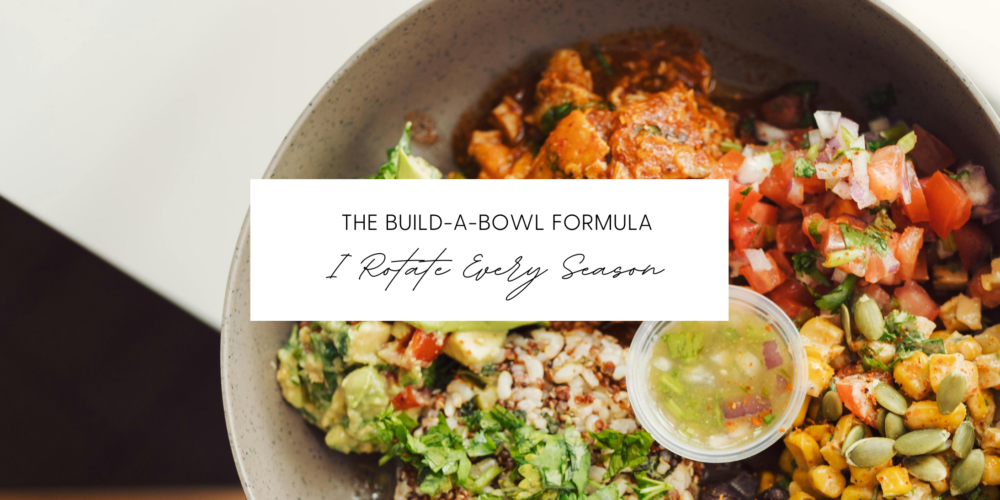
Bowls have become my most reliable meal format because they accommodate endless variation while following a consistent structure that makes preparation straightforward. The formula works equally well for quick weeknight dinners and intentional meal prep, requiring minimal recipes because the components combine intuitively once you understand the underlying framework. What makes this approach sustainable over time is rotating the specific ingredients seasonally, which keeps meals interesting while naturally incorporating produce at its peak freshness and flavor.
The basic bowl formula includes five components: a base, a protein, vegetables, a sauce or dressing, and toppings that add texture and interest. Each component can shift dramatically with the seasons while the overall structure remains constant, meaning the habit of building bowls becomes automatic even as the specific contents evolve throughout the year.
Here is how I approach each component and rotate ingredients as seasons change.
The Base Layer Sets the Foundation
The base provides substance and serves as the vehicle for other flavors. Grains work well because they absorb sauces and complement both warm and cool toppings. Leafy greens offer a lighter alternative when something less filling feels appropriate. The season influences which direction I lean toward, with heartier, warmer bases dominating colder months and lighter options appearing more frequently in summer.
During fall and winter, I rotate between brown rice, farro, quinoa, and roasted sweet potato cubes as primary bases. These grains and starches provide warmth and substance that feels satisfying when temperatures drop. I cook them in batches at the beginning of each week, so assembly requires only reheating rather than starting from scratch.
Spring and summer shift toward lighter foundations, including mixed greens, arugula, spinach, or chilled quinoa and farro prepared ahead and refrigerated. Zucchini noodles and cauliflower rice also appear during warmer months when something even lighter appeals. The cooler bases pair well with seasonal produce and feel appropriate when heavy, warming meals lose their appeal.
Protein Provides Staying Power
Adequate protein transforms a bowl from a side dish into a satisfying meal that maintains energy for hours. I aim for a substantial portion that makes the bowl feel complete rather than treating protein as a minor accent. The preparation method shifts with seasons, favoring roasted and braised options in cooler weather and grilled or poached preparations when heat feels unwelcome in the kitchen.
Fall and winter protein options in my rotation include roasted chicken thighs, braised beef, slow-cooker pulled pork, baked salmon, and white beans or chickpeas seasoned with warming spices. These preparations often happen on weekends when longer cooking times feel manageable, with portions saved for bowl assembly throughout the week.
Spring and summer bring grilled chicken breast, poached or canned salmon, grilled shrimp, marinated tofu, and simply prepared legumes. These proteins require less cooking time and pair well with the brighter flavors that characterize warmer-weather eating. Keeping canned beans, canned fish, and rotisserie chicken on hand ensures protein options are available even when advance preparation hasn’t happened.
Vegetables Add Volume and Nutrients
Vegetables should occupy a significant portion of the bowl, providing fiber, nutrients, and the variety that makes bowls visually appealing and texturally interesting. Mixing cooked and raw vegetables adds dimension, though the ratio shifts seasonally based on what’s available and what feels appropriate to eat.
Fall and winter vegetable options emphasize roasted preparations that develop deep flavor and tender texture. Roasted Brussels sprouts, butternut squash, broccoli, cauliflower, carrots, and beets are all regular features during colder months. Massaged kale and shaved cabbage provide raw options that can handle heartier dressings and maintain texture when combined with warm components.
Spring and summer expand the possibilities for raw vegetables considerably. Sliced cucumbers, cherry tomatoes, shaved radishes, snap peas, corn cut from the cob, and ribbons of summer squash all appear in warmer-weather bowls. Quick-sautéed zucchini, grilled asparagus, and blistered green beans offer cooked options that don’t require heating the oven during hot months.
Sauces and Dressings Unify Everything
The sauce brings all the components together and often defines the bowl’s overall character. A bowl with an identical base, protein, and vegetables can taste completely different depending on whether it’s dressed with tahini, peanut sauce, or chimichurri. Having several sauce options available enables variety without changing other components.
Fall and winter sauces in my rotation include tahini with lemon, miso ginger dressing, peanut sauce, creamy turmeric dressing, and simple olive oil with balsamic and herbs. These sauces complement roasted vegetables and warming proteins while adding richness that feels appropriate in colder weather.
Spring and summer bring brighter, lighter options, including lemon herb vinaigrette, green goddess dressing, cilantro lime crema, salsa verde, and simple combinations of olive oil with fresh citrus. These dressings enhance seasonal produce without overwhelming delicate flavors and feel refreshing rather than heavy.
Toppings Add Finishing Texture and Interest
Toppings provide crunch, creaminess, freshness, or other contrasting elements that elevate a bowl from ordinary to satisfying. These finishing touches often require no cooking and can be added with ingredients kept in stock.
Year-round staples include toasted nuts and seeds, crumbled cheese, sliced avocado, fresh herbs, pickled vegetables, and a finishing drizzle of quality olive oil. Seasonal additions include pomegranate seeds in fall, toasted pumpkin seeds in winter, fresh peas in spring, and heirloom tomato wedges in summer. These small additions create visual appeal while adding layers of flavor and texture, making each bowl feel intentional and complete.

Leave a Reply