The moment the mornings turn cool and crisp, my body begins its seasonal shift. There’s a shift in appetite, in sleep, in how I want to move through a room… The pace of things doesn’t always slow down this time of year, but something in me does.
These are the rituals I return to when the air gets drier, the days shorter, and my immune system calls for something a little deeper than hand sanitizer and supplements.
Eating in a Way That Feels Anchored to the Season
I don’t follow a strict seasonal menu, but I do pay attention to what feels right on my plate when the temperature drops. There’s a pull toward depth — roasted roots, lentils that have softened over low heat, greens that have been cooked down with garlic and broth. Citrus in the mornings, especially if I’ve been inside too long, and warming buckwheat groats.
I ask myself, does this feel warm? Is it nourishing? Does it feel grounding?
Herbal Tea as a Way Back Into the Body
There’s a pace to making tea that encourages a pause—pulling open a drawer of loose herbs, pouring boiling water slowly over something that evokes memory, and choosing a mug that feels good in your hand (handmade ceramic mugs are my favorite).
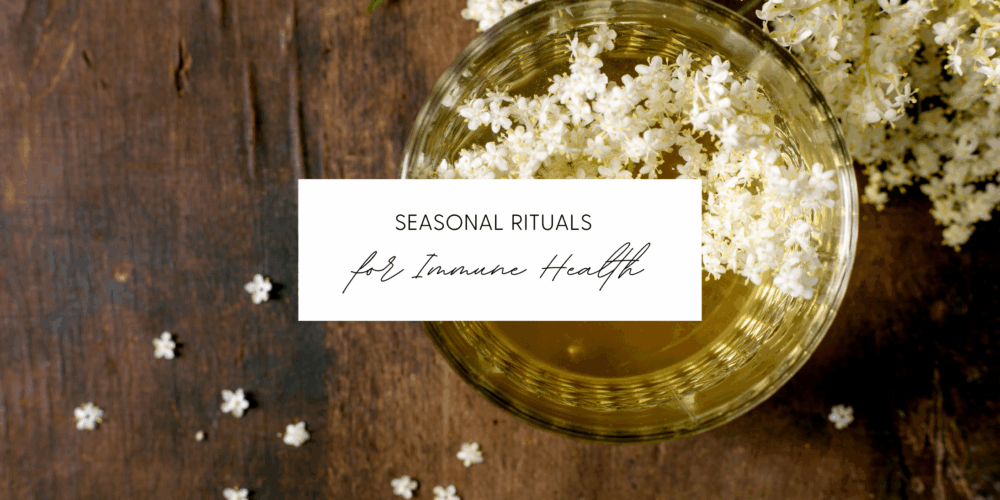
When my throat feels dry, I reach for marshmallow root. If I sense the ache that usually precedes an illness, I turn to elderflower or echinacea. Ginger is always nearby, regardless of the situation. Sometimes, I add thyme if I experience tightness in my chest.
But it’s not just the herbs; it’s the sitting. It’s about sipping slowly enough for the body to catch up to the moment. Sometimes I forget how much I’ve been bracing myself until that first warm swallow loosens something.
Treating Sleep Like an Environmental Need
When the sun goes down early in the evening, I stop trying to resist it. I change into soft clothes while dinner is still on the stove. I dim the lamps even before I feel tired. There’s something about meeting the season halfway that helps my nervous system settle sooner.
Some nights that means turning in early, even when the inbox isn’t empty. Other nights, it’s a slower wind-down. Reading a book before bed instead of scrolling and leaving the phone in the kitchen so my mornings don’t start on someone else’s timeline.
Letting Movement Stay Gentle, But Consistent
This isn’t the time I reach for intensity. If I’ve been inside too long, I’ll bundle up and walk around the neighborhood just to feel the air. If I’ve been sitting all day, I’ll lie on the floor and let my back melt into the ground before reaching for anything else.
Some days, stretching my arms above my head while the shower heats up is enough. Other days, I need more.
This movement focuses on circulation: getting my blood pumping and circulating my thoughts and feelings. It benefits everything.
Noticing What Builds Below the Surface
The cold season can be challenging; it’s not just about germs but also a time filled with overcommitment, strained boundaries, and emotional weight that can be hard to articulate.
I understand how important it is to check in when we start feeling off, even if there isn’t a clear reason. Those sudden cravings for sugar, small bursts of resentment in our interactions, or a lack of appetite when we know we should be eating—these are signals from our bodies and minds, asking us to pay attention.
Sometimes, what our immune system craves is a comforting bowl of broth, and other times, we just need to let our tears flow. Both of these responses are completely valid, and it’s okay to honor them.
Keeping Rituals Close, But Flexible
These practices aren’t always easy to maintain, and I don’t track or measure them. They don’t happen every day, and that’s perfectly okay. Some weeks, I find myself engaging in them naturally, while in other weeks, I might forget until my body sends me a signal to pay attention.
I strive to create an inviting space for these practices. I keep a variety of herbal teas within easy reach, have soft socks waiting by the bed, and I take the time each weekend to prepare a couple of comforting foods that will warm me on a cold afternoon. Even if the rest of the meal is a hodgepodge, those small acts of care mean a lot.
This journey isn’t about following a strict plan; it’s about nurturing a relationship with these practices. Over time, this connection can deepen, and it doesn’t have to rely solely on discipline. It’s okay to allow ourselves the grace to find our way back when we need to.